A Decade of Storms: Why 2025’s Calm Season Isn’t a Trend
5 min read · Aug 6, 2026
Executive Summary
For the first time in a decade, the 2025 Atlantic hurricane season ended without a single hurricane hitting the continental United States. Yet the same season produced three Category 5 hurricanes, tied for the second most ever recorded. They simply did not make landfall in the U.S.
That distinction matters. The threat that defines hurricane season for the U.S. is not the count of storms a forecaster predicts, but whether one of those storms strikes a populated area. For nine consecutive years before 2025, at least one did.
This report explains what hurricane season is, what the past decade has actually cost, and why one quiet year should not be mistaken for a change in direction.
What Is Hurricane Season
The Atlantic hurricane season runs from June 1 to November 30 each year. During those six months, warm ocean waters and unstable atmospheric conditions create the energy that fuels tropical storms, some of which strengthen into hurricanes capable of catastrophic damage from wind, storm surge, and rainfall.
Each spring, the National Oceanic and Atmospheric Administration (NOAA) publishes a forecast for how active the upcoming season will be. The forecast describes how many named storms (winds of 39 mph or greater), hurricanes (74 mph or greater), and major hurricanes (Category 3 or stronger, 111 mph or greater) are likely to form in the Atlantic basin.
A pre-season forecast says nothing about where storms will go, how strong they will become at landfall, or what they will hit. Those factors are determined by atmospheric steering currents, wind patterns far above the ocean surface that push storms east, west, north, or south as they travel. In 2025, those steering currents pushed every Atlantic hurricane away from the U.S. coastline. In 2024, they pushed five hurricanes into the U.S.
What the Past Decade Has Shown
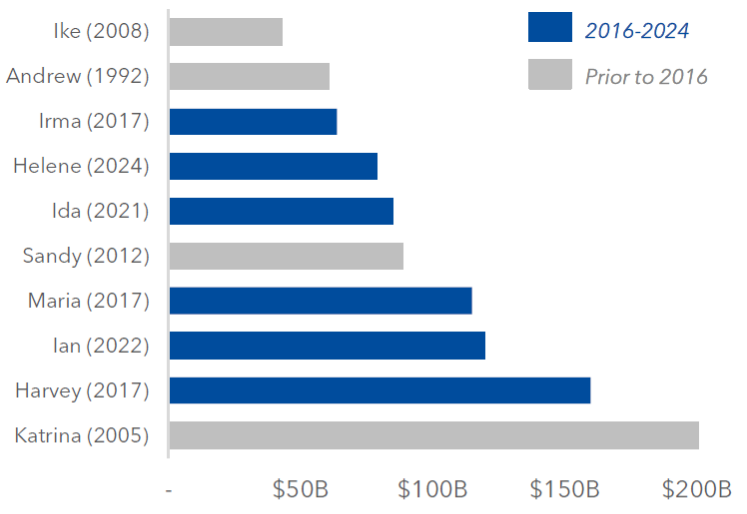
The nine years leading up to 2025 produced some of the most consequential losses in U.S. history. Between 2016 and 2024, 25 hurricanes made U.S. landfall (an average of nearly three per year). Five consecutive years (2020 through 2024) brought at least one major hurricane to U.S. shores. Six of the ten costliest U.S. hurricanes on record occurred during this window (Chart 2).
Chart 1. U.S. Hurricane Landfalls by Year, 2016-2024
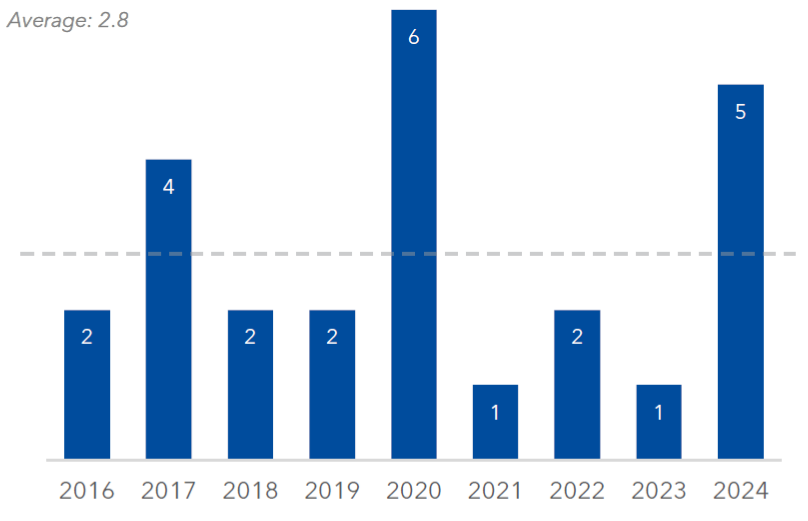
Chart 2. Top 10 Costliest Hurricane Events
Three years drove the bulk of the damage:
- 2017 — Hurricanes Harvey, Irma, and Maria struck within a six-week span, producing combined damage of $339 billion and forcing Congress to forgive $16 billion in National Flood Insurance Program (NFIP) debt — the first and only time that has happened.
- 2022 — Hurricane Ian made landfall in Southwest Florida as a Category 4, causing $120 billion in damage and becoming the deadliest storm to strike Florida since 1935.
- 2024 — Hurricanes Helene and Milton hit within two weeks of each other. Hurricane Helene alone caused $79 billion in damage and killed more than 250 people (surpassing Ian’s death toll), becoming the deadliest U.S. hurricane since Katrina.
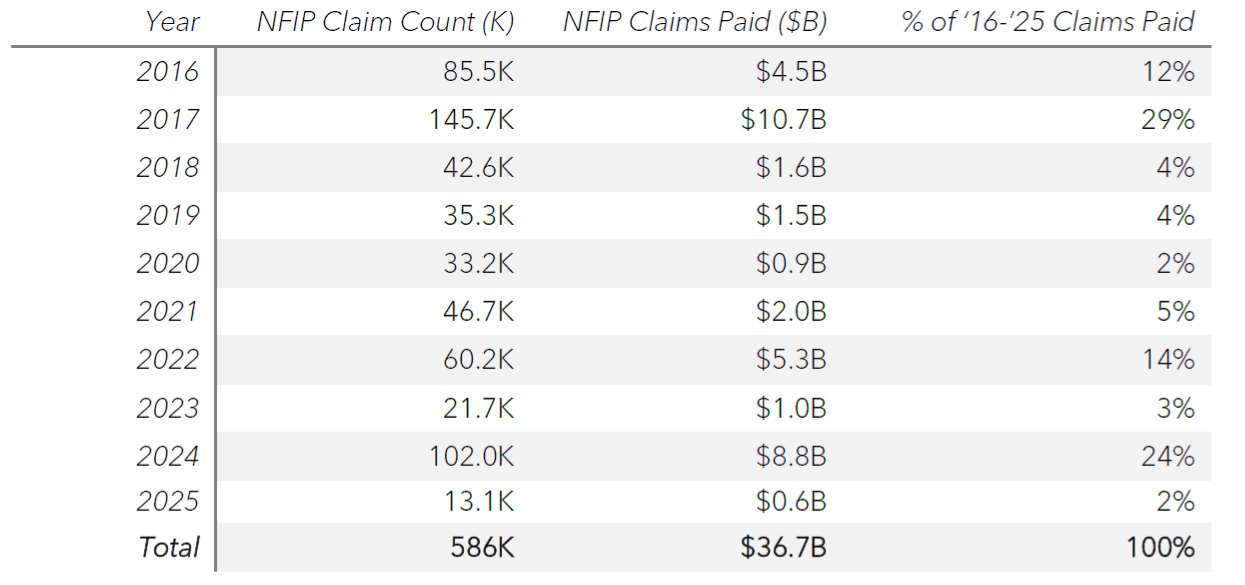
The cumulative impact of damage caused by storms over the last decade is most evident in data released by the NFIP – the primary provider of flood coverage in the United States. Over the full decade (2016-2025), the NFIP paid a non-inflation adjusted $36.7 billion on 586,000+ individual flood claims, accounting for 40% of all-time NFIP claims.
Table 1. NFIP Losses Paid by Year, 2016-2025
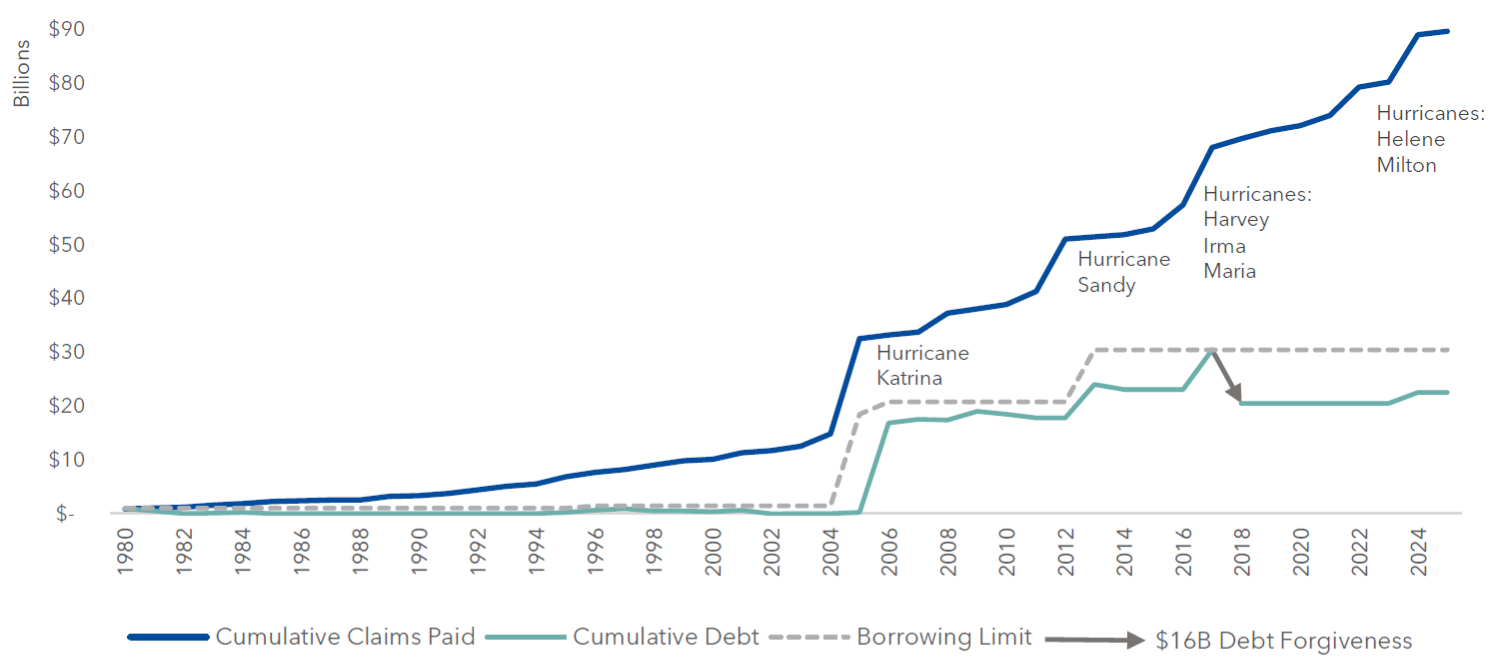
The damage didn’t just hit property owners, it strained the federal program that insures them. The NFIP today owes $22.525 billion to the U.S. Treasury, leaving only $7.9 billion of room before it hits its $30.425 billion borrowing cap. A repeat of the 2017 season (which cost the program $10.2 billion) would push the NFIP against that limit.
Chart 3 below shows the long-term pattern: each major event since 1980 has driven a step change in cumulative losses, with the most recent decade alone accounting for $15.5 billion of the program’s current debt. Without the $16 billion in NFIP debt that Congress forgave in 2017, the program would today owe roughly $38 billion. The 2025 season afforded the NFIP a reprieve, but the trajectory did not change.
Chart 3. NFIP Cumulative Claims Paid, Debt, and Borrowing Limit, 1980-2025
Why 2025 Isn’t a Trend
One season without a U.S. landfall does not mean the risk has receded. The underlying exposure remains
unchanged.
Exposure has only grown
The same conditions that caused significant damage over the past decade remain in place and, in fact, are intensifying. Atlantic sea surface temperatures remain at or near record levels. Warmer air holds more moisture (roughly 7% more for every 1°C of warming), which translates directly into heavier rainfall during storm events. Sea levels are four inches higher than in 1993, rising faster than at any point in the past 3,000 years. More property and infrastructure have been built along vulnerable coastlines than at any prior point. A recent University of Alabama study estimated that 17.5 million people along the U.S. Atlantic and Gulf coasts face a “very high” risk of coastal flooding, with an additional 17 million at “high” risk.
2025 itself proves this. The Atlantic basin produced three Category 5 hurricanes (only the second time that’s happened), and Hurricane Melissa made landfall in Jamaica at 185 mph, tying the strongest Atlantic storm ever recorded at landfall. The basin’s most dangerous storms simply tracked away from the U.S. coastline. 2025 also became the most flash-flood-warned year in nearly four decades, with the National Weather Service issuing more flash flood warnings than in any year since tracking began in 1986.
The 2026 outlook
NOAA’s 2026 outlook calls for a below-normal Atlantic hurricane season, citing the expected development of a strong El Niño pattern that historically suppresses Atlantic tropical activity. The outlook forecasts 8–14 named storms, 3–6 hurricanes, and 1–3 major hurricanes. Both Pacific basins, however, are forecast to be active, with the central Pacific facing a 70% chance of an above-normal season. Ocean energy is simply distributed differently this year.
Even within the Atlantic, a pre-season outlook describes where storms might form, not where they will go. Hurricane Sandy made landfall in 2012 as a Category 1 hurricane (the weakest classification), but because it struck one of the most densely populated regions of the country, it affected 24 states and caused roughly $70 billion in damage. Once a storm reaches a populated coastline, the question becomes whether the people in its path are prepared for what’s about to hit them. Most are not.
Preparedness and mitigation
Roughly 4% of Americans carry flood insurance. In the 100 counties hit hardest by Hurricane Helene, that figure was about 2%. In Buncombe County, North Carolina — where entire towns disappeared underwater — less than 1% of households had it. Helene caused an estimated $20–30 billion in uninsured flood losses that homeowners absorbed directly.
A homeowner who secured flood coverage in the immediate aftermath of Hurricane Ian (2022) or Hurricane Helene (2024) may weigh that decision differently after a quiet 2025 season. In the face of increasing flood risk, preparedness and mitigation remain the most reliable response.
